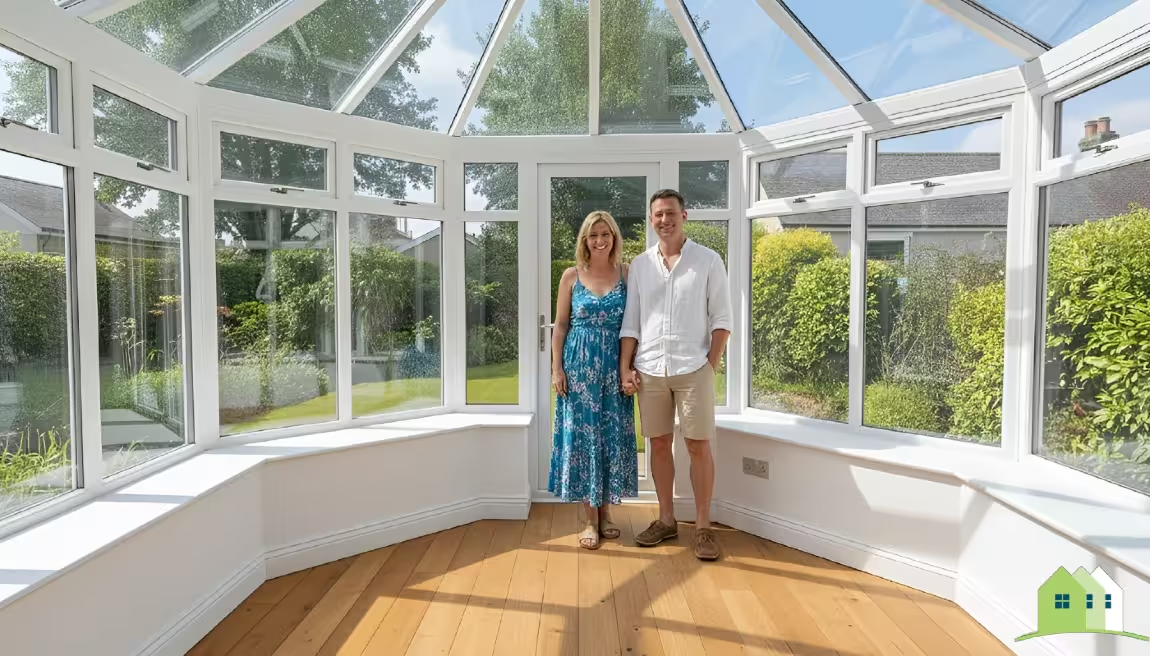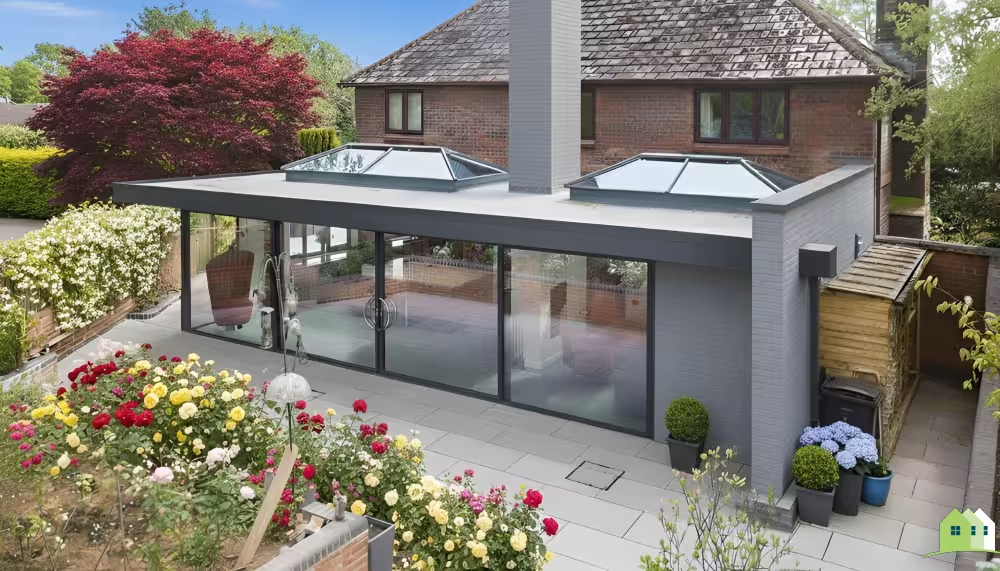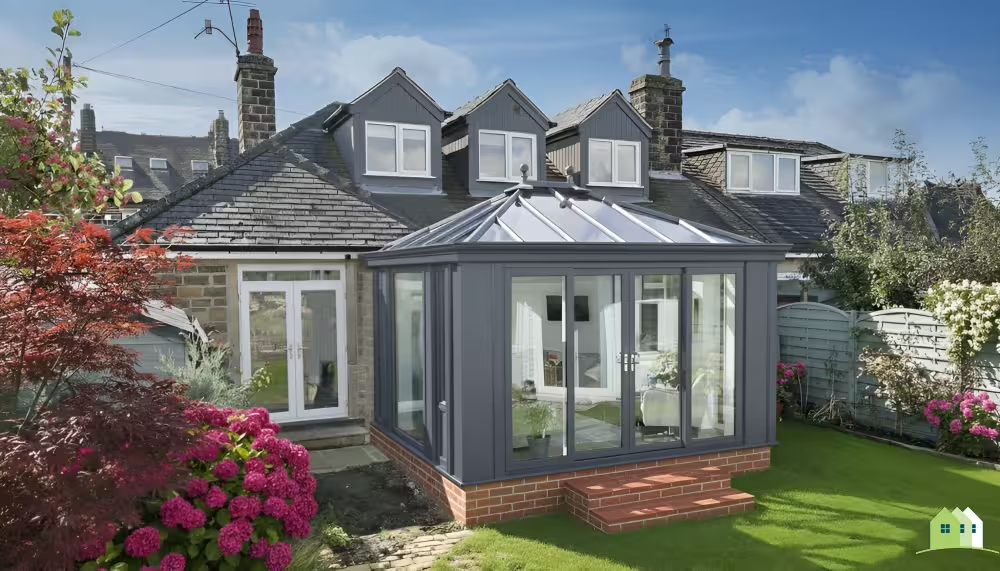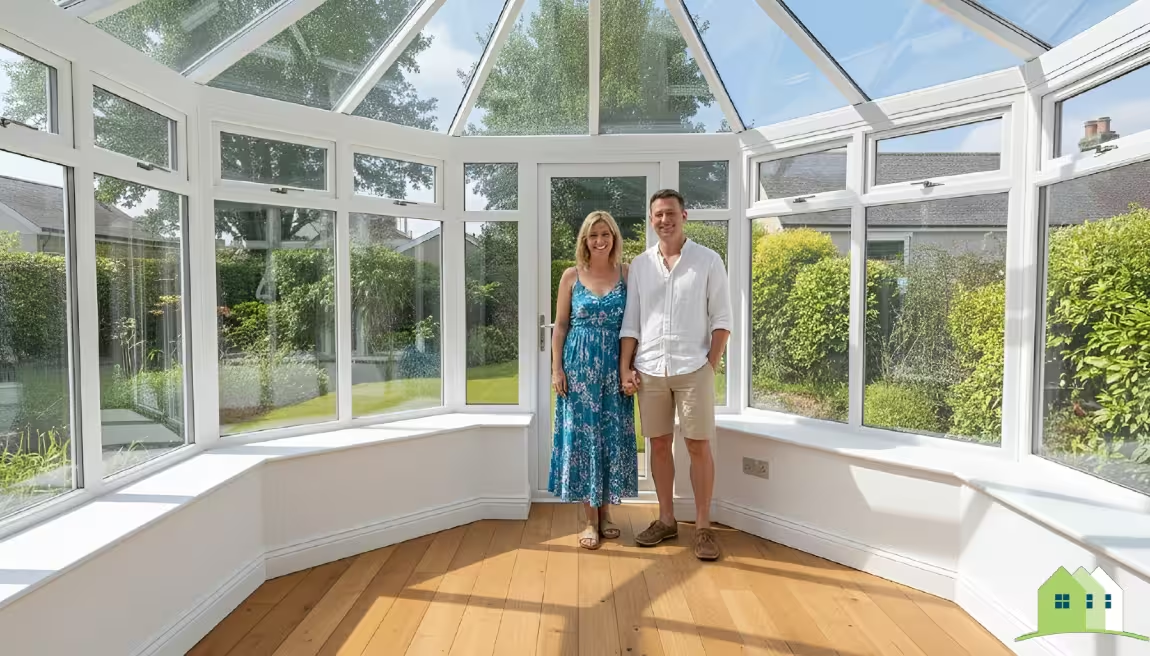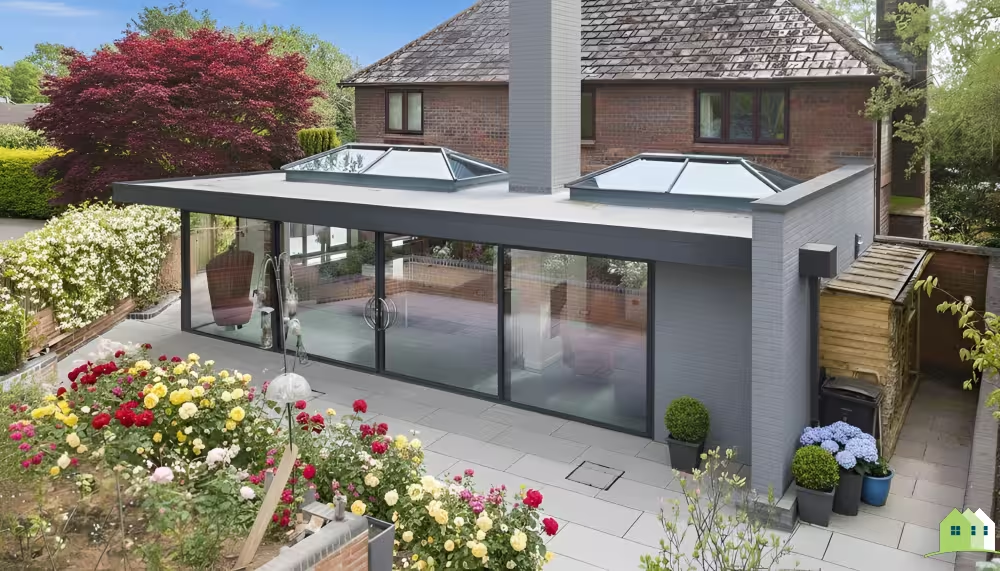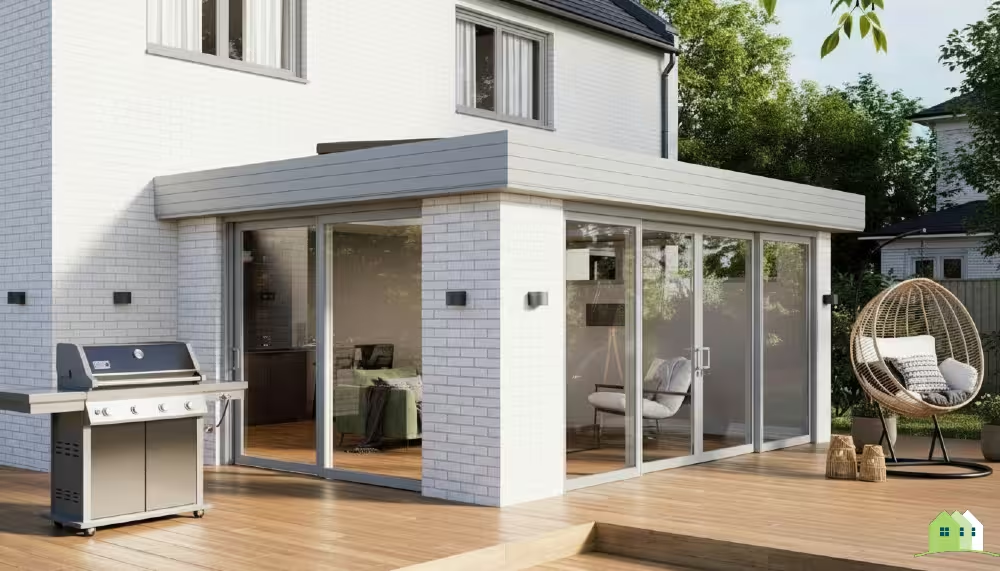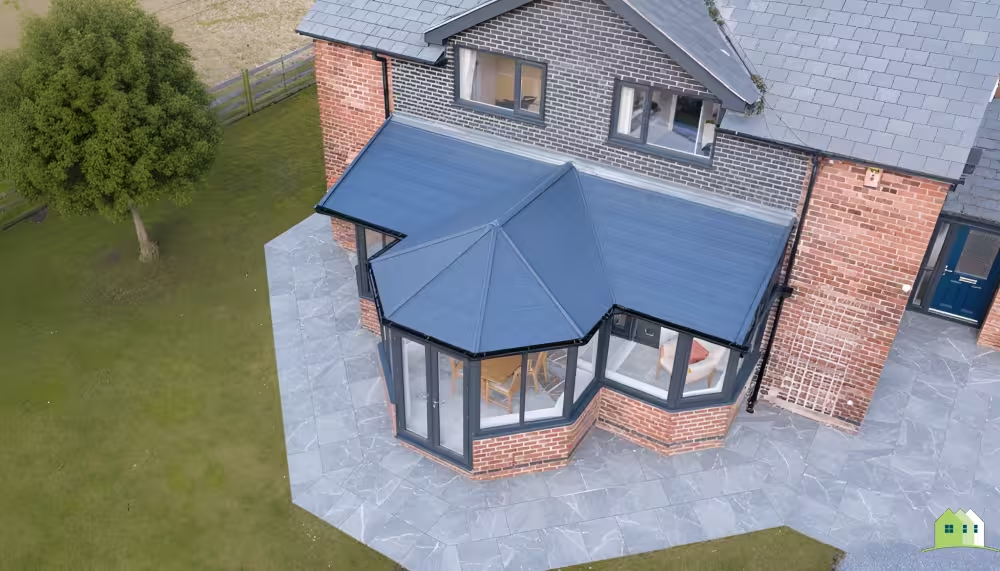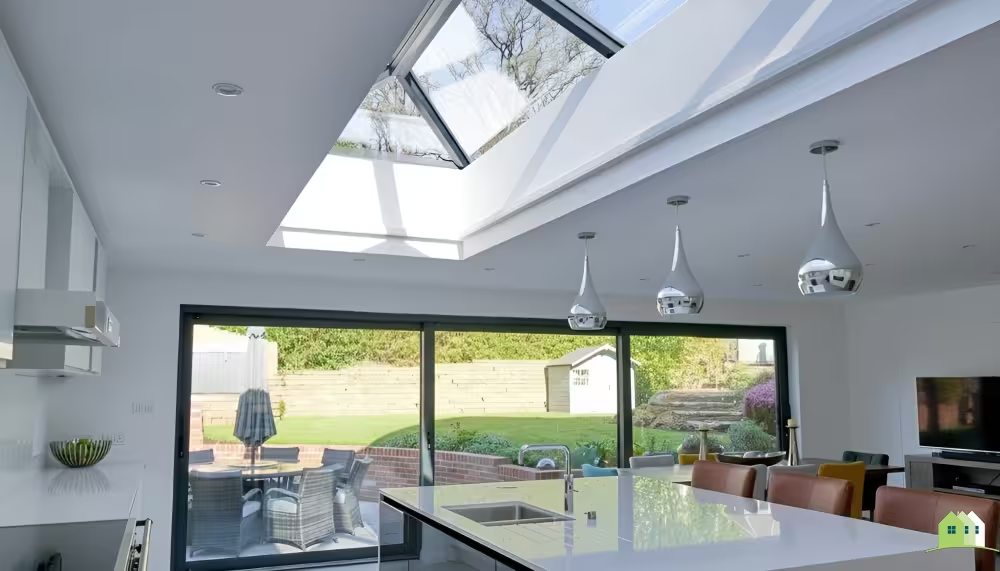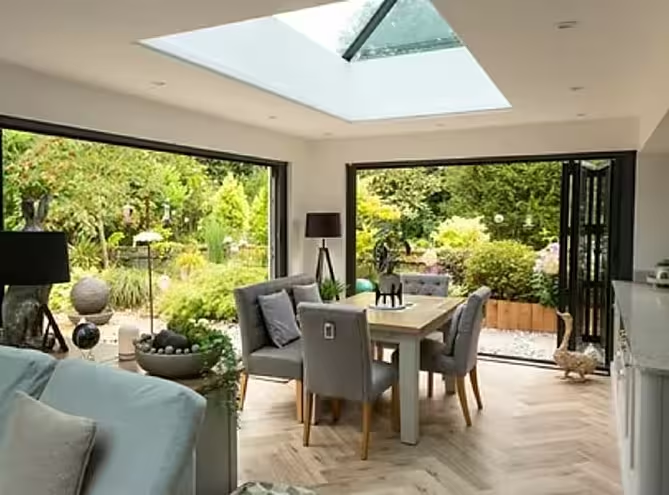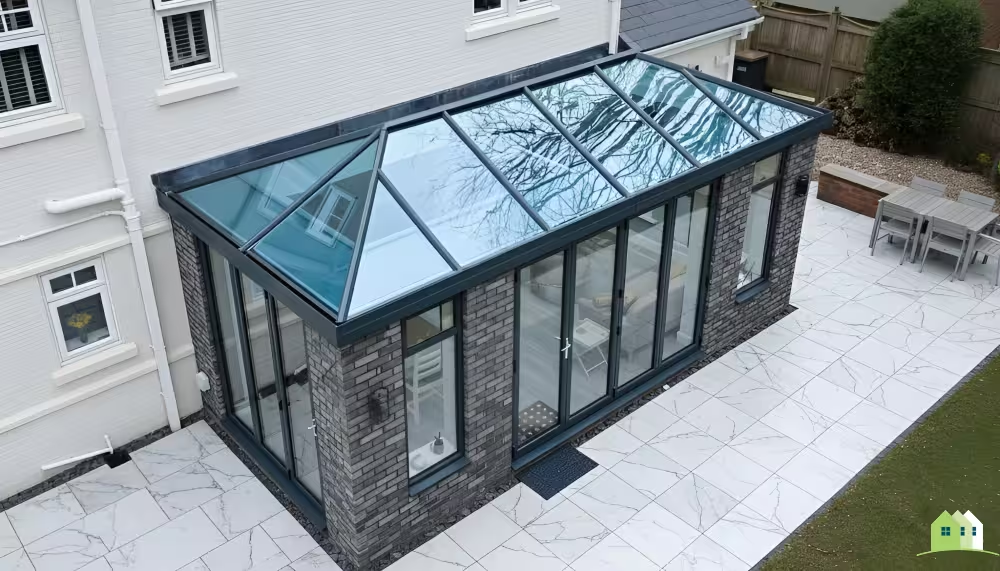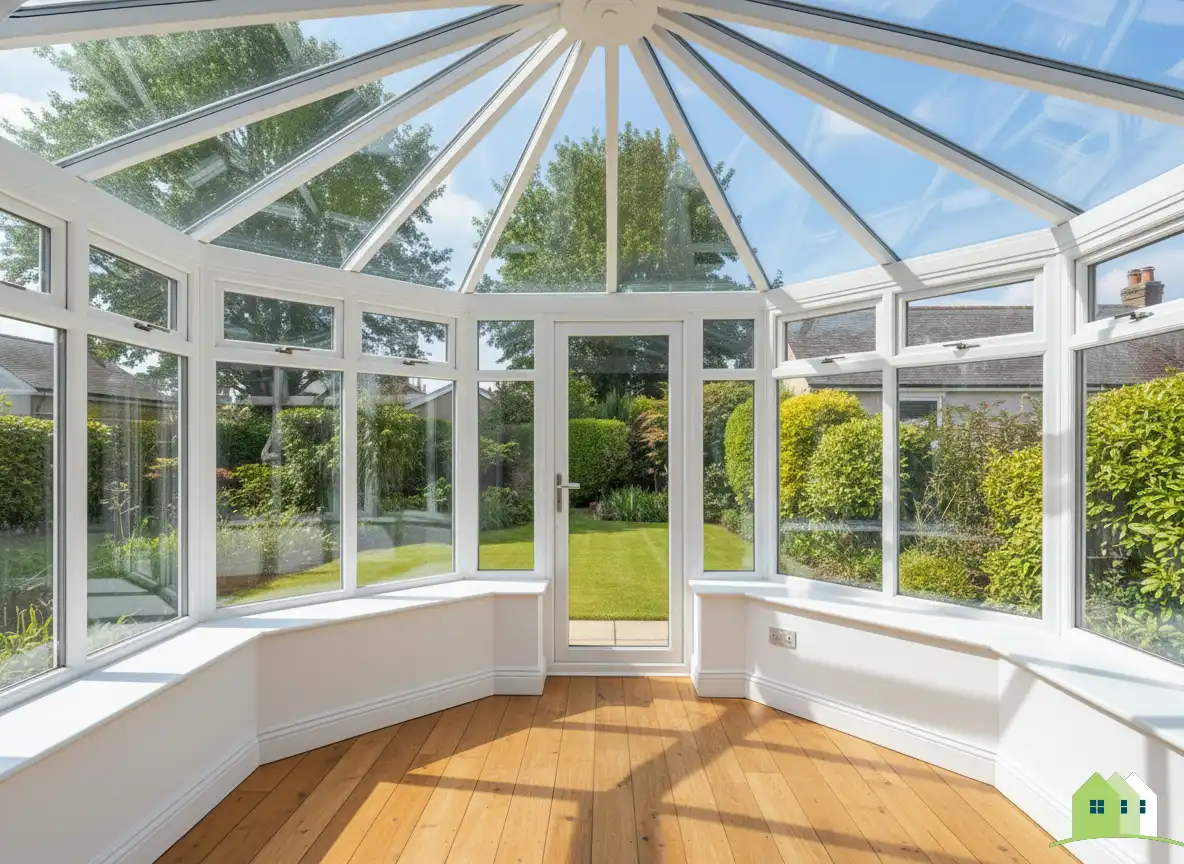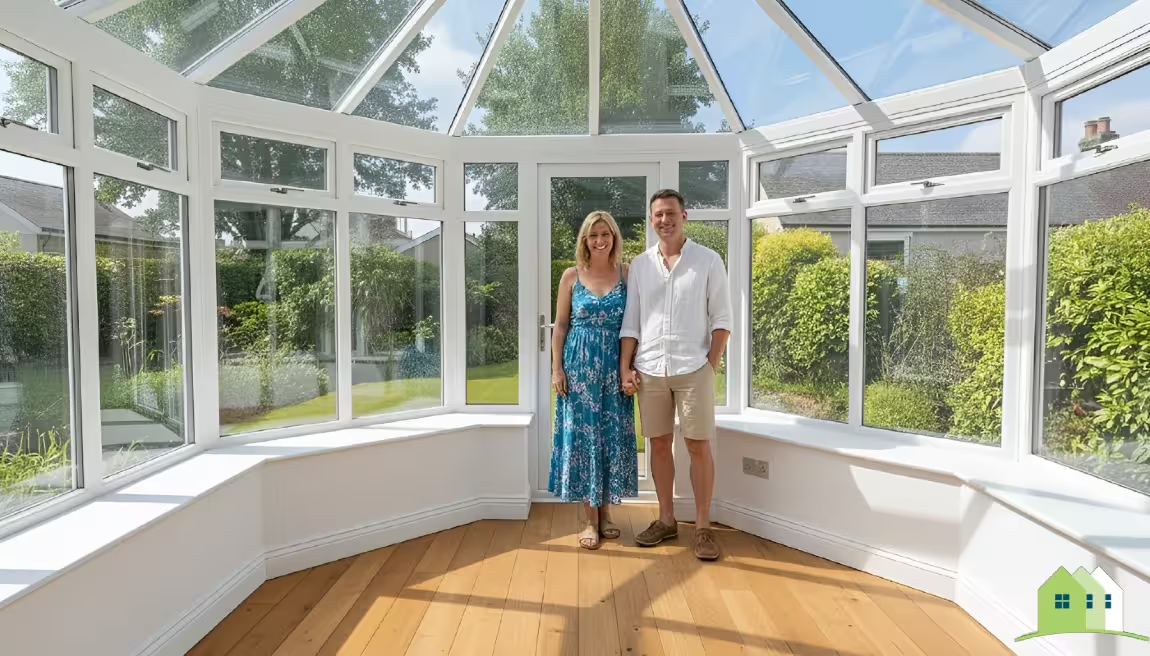
Choosing the best conservatory style comes down to your home’s architecture, how you plan to use the space, and of course your budget. Homebrite Windows offers all the popular conservatory styles - from sleek Edwardian and elegant Victorian designs to practical lean-to and dramatic gable-end models. Each style has its perks. For example, lean-to conservatories are generally the most cost-effective choice due to their simple design.
If you’re looking for a budget-friendly addition or have a bungalow/limited space, a lean-to could be ideal. On the other hand, more elaborate styles (like a large bespoke or hardwood conservatory) will be at the higher end of the price range. Classic Victorian conservatories with their curved bay fronts and ornate details add lots of charm, while an Edwardian conservatory provides a spacious rectangular floor plan that maximises usable area - great for dining or living room extensions. Homebrite even creates custom P-shaped or bespoke designs that blend multiple styles if you need something unique.
The good news is you don’t have to figure it out alone. With over 50 years’ experience in Kent and the South East, Homebrite understands that every home is unique. Our team will guide you through the options with a free consultation, helping you balance aesthetics and budget to find your perfect fit. We believe in honest, no-pressure advice - our consultants will listen to your ideas and show you suitable styles from our range of 6 versatile conservatory designs. Because we offer both traditional and modern styles, as well as different materials and finishing touches, we can tailor the conservatory to complement your house perfectly. Ultimately, the “best” style is the one that enhances your home’s character and meets your needs without breaking the bank. Homebrite’s role is to make that decision easy and enjoyable for you, by sharing our expertise and past project examples. From first ideas to final choice, we’re here to ensure you get a conservatory style you’ll love for years to come.
Homeowners across Kent and the South East choose Homebrite Windows because of our proven track record, trustworthiness, and quality service over decades. Homebrite is a well established local company, not a short term operation that disappears once the job is done. Being locally based (with offices in Sheerness and Maidstone) means we know the area, and we’ve built up a strong reputation in Kent communities by consistently doing right by our customers. We pride ourselves on transparent, honest service (no false discounts or high pressure sales tactics). In fact, Homebrite stands out for offering fair, upfront pricing and no “inflated” quotes, so customers feel comfortable and trust they’re getting good value.
Quality and professionalism are at the heart of why people recommend Homebrite. We’re fully FENSA approved installers and members of the Glass & Glazing Federation, which means our work meets strict industry standards. Every conservatory (and window/door) we install comes with a robust 10 year guarantee for peace of mind. Many homeowners also appreciate that we offer the best of both worlds: the personal touch of a local family run business and the high end products and expertise you’d expect from a national company. Our team comprises seasoned experts from design consultants to builders who have extensive experience in conservatory construction and installation, ensuring meticulous workmanship on every project. We handle everything from the base building to the final finishing, and even take care of building control sign offs when needed for structural work. This gives customers confidence that their conservatory will be built to last by qualified professionals.
Perhaps the biggest reason so many in Kent choose Homebrite is the feedback from their neighbours and friends. Homebrite has excellent customer reviews and much of our business comes from word of mouth. Homeowners frequently praise our professional service, competitive prices, and high-quality results, noting that our installation teams are friendly, skilled, and tidy.
Many reviews specifically mention our managing director, Peter, and the Homebrite team for being approachable, attentive and going the extra mile to ensure everything is perfect. Knowing that others in your community have had a great experience gives new customers added reassurance.
Finally, we understand the local housing styles and planning requirements in the South East. Whether you’re in a coastal cottage or a suburban semi, we’ve likely worked on a home like yours. This local expertise, combined with our longevity and customer-first approach, is why Homebrite Windows has become Kent’s trusted choice for conservatories, windows and doors. When you choose Homebrite, you’re choosing a company that will treat your home as if it were our own - and that’s why so many families here have trusted us with their home improvements, time and time again.
It’s very easy to get started with Homebrite. To arrange a free home survey (with no obligation), you have a couple of convenient options:
Give us a call: The fastest way is to call Homebrite Windows directly. Our phone number is 01795 358840, and our friendly team will take your details and set up an appointment for a home visit. We’ll connect you with your nearest conservatory specialist based on your location in Kent or the South East. Since we have consultants throughout the region (Maidstone, Sittingbourne, Canterbury, and beyond), we can usually arrange a survey promptly at a time that suits you - often within a few days of your call.
If you prefer, you can request a free quote or survey by filling in a short form. Just provide your name, contact details, and what you’re interested in (e.g. a new conservatory). We’ll get back to you very quickly to confirm an appointment. Homebrite’s online “Get Instant Quote” form makes it simple to start the process.
Homebrite prides itself on a quick and hassle free survey process. When you request a free home visit, one of our local conservatory experts will come to your home to discuss your ideas, take measurements, and answer any questions, all completely free of charge. This initial visit is very informative and not a high pressure sales pitch. We’ll assess your home and garden space, talk through what kind of conservatory or extension you envisage, and provide professional advice. The specialist will also be able to show you sample materials or brochures and discuss budgeting. After the survey, Homebrite will prepare a detailed quote for you that includes everything (product and installation costs) so there are no surprises.
To summarise, just call or contact us online to book your free survey. We’ll handle the rest - from arranging your nearest representative to visit, to conducting the survey and giving you a clear quote. We know homeowners today have busy schedules, so we strive to be flexible and prompt. In many cases, we can arrange your survey within one working day of your enquiry. And remember, this consultation is free and comes with no obligation. It’s the best way to get accurate information tailored to your home. After all, every conservatory project starts with that first friendly visit - Homebrite makes that step easy so you can move forward with confidence.
A conservatory might look like a light structure of glass and frames, but it still requires proper foundations just like any extension. In fact, a well built conservatory is only as strong as its base. Without a solid foundation, you could face all sorts of problems: uneven, sinking floors, doors and windows that stick, cold draughts, damp seeping in, or even structural failure. Just as with any building, the foundation’s job is to transfer the weight of the conservatory safely into the ground and keep everything stable. So yes, conservatories do need proper foundations; there is no cutting corners on this if you want the structure to last.
Homebrite Windows understands this fully, and we ensure every conservatory we build has a robust, long lasting foundation. Our installation teams have decades of experience in groundworks and follow building best practices. We do not treat a conservatory like a flimsy DIY project; we build it to professional construction standards. Typically, we will excavate and lay concrete footings to a depth that suits your soil conditions, often around 1 metre deep or more, depending on the project. For example, harder ground or smaller lean to conservatories may require at least about a 1 metre depth, whereas larger conservatories or those on clay soil may need foundations 1.5 metres or deeper for stability. We also incorporate damp proof membranes and proper base insulation as needed, so that your conservatory floor stays dry and warm.
It is worth noting that building regulations come into play with foundations in certain cases. If your conservatory will be open plan with the main house, with no separating doors, or you plan to heat it with your central heating, then it must comply with stricter building regulations, including foundation requirements, just like an extension. Homebrite takes care of this compliance for you. We are comfortable handling full structural builds with building control sign off where required. Our surveyors will advise if your project needs any approval, and we will build the base accordingly so that it meets or exceeds regulation standards. Even if your conservatory is classed as exempt from regulations, Homebrite never exempts it from quality; we still construct the base to high standards because we want your conservatory to stand the test of time.
In short, we make sure your conservatory is built to last. That means a sturdy foundation, structurally sound construction, and quality materials throughout. Many cheap conservatory companies have been guilty of using substandard, shallow foundations in the past. Because a stand alone conservatory does not always require building regulations, some installers cut costs on the unseen parts. Homebrite refuses to do that. We build every conservatory as if we were building an extension on our own home, with solid concrete footings, proper footings in any walls, and reinforcement where needed. This approach is backed by our comprehensive 10 year guarantee, but in reality, a Homebrite conservatory foundation is likely to last decades beyond that. We want you to have peace of mind that your new space is not going to shift or settle. Our long history in the building trade in Kent means we are knowledgeable about local ground conditions, whether your home is on clay, sand, or otherwise, and we plan the base construction accordingly to help avoid issues such as subsidence. So yes, conservatories need proper foundations, and with Homebrite, you can be confident your conservatory will be built on a rock solid foundation that keeps it safe and comfortable for generations to come.
Adding a conservatory is one of the most popular home improvements in the UK, and for good reason. A well built conservatory gives you extra living space to enjoy all year round, often for a lower cost than a traditional extension, and it can indeed add value to your property. When done properly, a conservatory is absolutely a worthwhile investment for your home, both in terms of lifestyle and financial return.
From a lifestyle perspective, a conservatory creates a bright, relaxing multi purpose room that connects your home and garden. It can serve as a sunny dining area, a family playroom, a home office with garden views, or simply a place to unwind with a cup of tea while enjoying natural light. Many homeowners find that a conservatory quickly becomes their favourite room in the house. This kind of improvement enhances your daily living experience, something that is hard to put a price on. It brings in plenty of natural light, which studies say can boost mood and wellbeing, and gives you that much desired indoor and outdoor feel without the cost of moving to a bigger house. Especially here in the UK, where the weather is variable, having an insulated conservatory means you can enjoy your garden views even on rainy days or in winter.
In terms of adding value to the property, a conservatory can make a significant positive impact if it is high quality. According to the Nationwide Building Society, a high quality conservatory can add between 5% and 15% to the overall value of your home. In other words, if you own a £300,000 house, a well designed conservatory might increase your home’s value by roughly £15,000 to £45,000. That is a substantial return on investment. It is one of the reasons conservatories are often cited as one of the best value home improvements in relation to their cost. Of course, the exact increase in value can vary depending on your location and the size and specification of the conservatory, but estate agents generally agree that extra space, especially attractive living space such as a conservatory, makes a home more desirable to buyers. In fact, homes with flexible, light filled spaces tend to stand out in the market. Future buyers often love the idea of a conservatory that is already in place, as it means more space to use as they please, and they did not have to build it themselves.
It is important to note that for a conservatory to truly be a worthwhile investment, it needs to be done properly. A poorly built, cheap conservatory, for example one that is too hot in summer and freezing in winter or has leaks, might actually detract from a home’s appeal. That is why choosing an experienced installer like Homebrite is key. We ensure your conservatory is built with quality materials, such as thermally efficient glass, durable frames and proper ventilation, so that it genuinely enhances your home. Quality matters. A well designed, well insulated conservatory by Homebrite will enhance your property’s value and usability, whereas a poor quality job could become an unused space. Homebrite conservatories feature high performance glazing and construction techniques that make the space comfortable all year round, meaning it effectively functions as an extension of your home. Buyers will see it as additional, genuine living space, not a greenhouse that simply looks attached to the house. We also make sure the style of the conservatory suits your home’s character, so it looks like a natural addition. This coherence can protect and boost the value added.
In summary, a conservatory from Homebrite Windows is absolutely a worthwhile investment for most UK homeowners. You will enjoy a better lifestyle now, gaining space and light, and you are likely to increase the resale value of your property in future if it is a quality installation. Many of our customers tell us their only regret is not adding a conservatory sooner. With our expertise, we make sure your conservatory is not just an add on, but a seamless, valuable extension of your home that pays dividends in enjoyment and equity.
With so many choices available, it is normal to wonder which type of conservatory is right for you. The type of conservatory you should buy really depends on your goals for the space and your home’s style. Homebrite Windows offers a comprehensive range, so we can tailor the conservatory to your needs. Here are a few considerations on types:
Traditional vs. modern styles: If you have a period or traditional home (or simply love classic charm), you might lean towards an Edwardian or Victorian conservatory. Edwardian conservatories have a rectangular floor plan and a pitched roof, maximising interior space, which is great for dining rooms or living areas. Victorian conservatories have the distinctive faceted bay end, usually with three or five segments, and ornate ridge details, adding elegance and character to older properties. For a more contemporary home, or a simpler look, a lean to conservatory is a popular choice. It has a single sloping roof and a clean, understated design that suits bungalows or modern houses well. Lean to designs are also known as sunrooms or garden rooms and work nicely when you want a straightforward extension of a kitchen or lounge. If you want something grand or with a statement roof, a gable end conservatory has an upright front that creates a lofty, cathedral like ceiling at the end, which is great for capturing sky views. Homebrite can also combine styles. For example, a P shaped conservatory merges a lean to with a Victorian design to create two distinct areas, perhaps a seating area and a play area, which is ideal for larger homes. If none of the standard styles fit exactly what you want, we offer bespoke conservatories where we design the shape and style around your vision. We also install Loggia conservatories, which blend the lightness of a conservatory with the solid feel of an orangery by including insulated corner columns and a LivinRoom interior pelmet for a real room like feel. In short, there is no single type that is best for everyone. The benefit of working with Homebrite is that we will help you choose from these many types the one that suits your home and lifestyle best.
Design options: Homebrite conservatories are highly customisable. Beyond the basic shape, you will have choices in the design details. For instance, we offer three different conservatory roof options. You can choose a classic glass roof, a solid tiled roof, or a hybrid solution. Glass roofs are excellent for maximising sunlight. We use high performance glass that lets in light but also insulates, more on glazing below. If you are aiming for a true extension feel, a tiled roof conservatory, sometimes called a sunroom, uses a lightweight tiled system to match your house roof, giving you a cosy room and excellent insulation. The hybrid option, such as the Ultraframe Livinroof we provide, combines the two, with solid panels plus some glazed sections, so you get a mix of light and insulation. The frame design is also up to you. Homebrite can build with uPVC frames, which are very popular and low maintenance, or aluminium frames for a slimmer, contemporary look, or even bespoke timber effect materials if you want a heritage style. You will choose the colour finish. White is classic, but we also offer elegant colours such as anthracite grey, Chartwell green, black, or woodgrain foils for a timber appearance. Additionally, you can decide on wall height. Some conservatories have brick dwarf walls a couple of feet high with glass above, while others are full floor to ceiling glass. We tailor this based on your preferences. Dwarf walls can make the room feel more integrated and allow for electrical outlets and radiators, whereas full glass to the ground maximises views. Inside, there are design options such as lighting, and we can integrate lighting into the ceiling or pelmets, and even speakers or climate control systems. Essentially, Homebrite will design your conservatory to your specifications. It will not be a standard, off the shelf design. You get to pick the style, layout and features that you will love.
Glazing options: This is a crucial aspect of any conservatory, and Homebrite excels here by offering advanced glazing solutions. All our conservatories come with high performance double glazing as standard, and you can upgrade to triple glazing if you wish. We use Planitherm glass, Standard, Comfort, or Comfort Plus variants, which is a low emissivity, energy efficient glass that keeps your conservatory well insulated. For the roof and windows, you can opt for special solar control glass. This is essential in our opinion for a south facing conservatory or anywhere that receives a lot of sun. Solar control glass has an invisible coating that reflects a portion of the sun’s heat, so it helps to prevent the conservatory from overheating in summer, while still letting in plenty of light. It also blocks most ultraviolet rays to protect your furniture from fading. In this way, your new space will be comfortable even on hot days, and it also helps retain heat in winter. Another popular glazing option is self cleaning glass. This glass has a special coating that uses sunlight to break down dirt so that it washes off with rain, keeping your conservatory glass clearer with much less upkeep. Many Homebrite customers choose self cleaning glass for the roof especially, since it is harder to reach for cleaning. We also offer various decorative glazing touches. For instance, you might add Georgian bar grids or leaded patterns to match your home’s windows, or choose frosted or obscure glass for lower panels if you want more privacy. If your conservatory includes any solid sections or lower walls, we will ensure they are properly insulated. The glazing we use is all toughened safety glass by default for safety, and we make sure the whole structure is fully compliant with UK thermal standards. The result of these glazing options is a conservatory that is not too hot, not too cold, and not a nuisance to clean. Instead, it is truly a room you can use comfortably every day.
In summary, Homebrite offers a very wide range of conservatory types and custom options. There is practically no limit to what we can do, from the style and size to the roof type, frame colour and glazing features. When deciding what type to buy, think about your priorities. Do you want maximum light and an excellent garden view? Do you need an extension that feels like a seamless room? How important is maintenance when compared with appearance? And of course, consider your home’s design. You generally want the conservatory to complement it, and we will help with that part. During our free design consultation, we will guide you through all these design and glazing choices. Our goal is to deliver a conservatory that fits you perfectly, whether that is a cosy three by three metre lean to sunroom with a self cleaning glass roof, or a grand five metre bespoke structure with a part solid roof and decorative glass. You can be confident that whatever type you decide on, Homebrite will use top quality materials and skilled installers so that your conservatory is a joy to use and built to last.
When it comes to flooring a conservatory, you will want a material that can handle temperature changes, sunlight, and people walking in from the garden, all while looking great. Here are some of the best flooring options for a conservatory, and why they work well:
Porcelain or Ceramic Tiles: Hard wearing floor tiles are extremely popular in conservatories because they are durable, easy to clean, and resist fading. Tiles do not mind the extra sun exposure; they will not warp or discolour under ultraviolet rays. They also help regulate the temperature: tiles stay cool in summer, and if you install underfloor heating beneath them, they will be pleasantly warm in winter. Porcelain tiles, or natural stone such as slate, give an elegant finish and can handle heavy use, including muddy shoes and pet paws, without scratching. The only downside is that they can feel cold on bare feet in cooler months if not heated, but that is easily solved with a rug or underfloor heating. Given their longevity and low maintenance, tiled floors are often the top choice for conservatories.
Vinyl Flooring (LVT): Luxury Vinyl Tiles, or rigid core vinyl planks, are an excellent conservatory flooring solution. Modern vinyl is nothing like old linoleum. High quality LVT can mimic wood or stone beautifully, and it is highly resistant to temperature changes and moisture. Vinyl will not swell or crack when your conservatory gets warm in summer or cool in winter. In fact, rigid core vinyl products are designed to stay stable even in environments such as conservatories that can reach high temperatures under sunlight. Vinyl is also soft and comfortable underfoot, warmer than tile on a cold morning, and it is completely waterproof, which is ideal if people will be coming in from the garden with wet shoes or if you have the odd plant pot spill. Maintenance is very straightforward: just a sweep and mop. Homebrite’s flooring partners often recommend vinyl for sunrooms because it combines durability with comfort, and many vinyl options have ultraviolet resistant coatings to help prevent fading. If you want a floor that can cope with almost anything and still be forgiving, softer to walk on and not as hard as tile, vinyl is an excellent choice.
Laminate Flooring: Good quality laminate can also work in a conservatory, with some caveats. Laminate is popular because it is cost effective and comes in a huge array of designs, usually emulating wood or stone. It is relatively easy to install and replace. In a conservatory, you will want to pick a laminate that is water resistant, to handle any moisture, and make sure it is installed with the proper expansion gap around the edges. Laminate floors are essentially wood based boards, so they will expand and contract a little with temperature and humidity changes, and that expansion gap is crucial to avoid buckling when the room heats up. Many modern laminates are made with built in features to tolerate conservatory conditions, and they can be quite durable. They are also easy to clean for everyday dirt. The key is professional installation in a conservatory. Homebrite can advise on specialist underlays and perimeter trims to ensure the laminate can float and move with temperature changes. When done properly, laminate gives you the warm look of wood at a fraction of the cost, and it can last many years. Just be mindful to mop up large water spills, since too much standing water can seep into joints, and consider adding a rug in very sunny spots if you notice any minor fading over time. Overall, laminate is a practical, budget friendly option that can work well if you choose a suitable product and install it correctly.
Engineered Wood Flooring: If you love the look of real wood, engineered hardwood is the best option for a conservatory, rather than solid hardwood, which we will mention in a moment. Engineered wood planks are made of a real wood veneer on top of stable layers, which makes them more resistant to warping compared to solid timber. They bring natural warmth and the beauty of wood to the room, and with the right finish, they can handle the conditions reasonably well. That said, wood in any form is more sensitive than tile or vinyl. You will need to keep an eye on humidity and perhaps use a dehumidifier or ventilation to avoid excessive moisture. Engineered wood can be a little more expensive, and it requires some maintenance, such as resealing or careful cleaning to avoid scratches. In a conservatory that gets very hot, even engineered boards will expand slightly, so installation with expansion gaps and possibly flexible adhesives is important. The appeal of wood floors is undeniable; they can make your conservatory feel like a true extension of your living room. Just be aware that you will have to care for it, for example by using rugs in high traffic or high sun areas, and cleaning up water promptly. Many people do successfully use engineered oak or similar in their conservatories for a luxurious look, but from a purely practical point of view, other materials are easier. If you do opt for wood, Homebrite will ensure proper installation methods to give it the best possible longevity in your conservatory.
What to Avoid: Generally, solid hardwood flooring is not recommended in conservatories. Solid wood planks can swell, shrink, and crack dramatically with the temperature and humidity changes a conservatory experiences. The intense sun can also bleach the colour out of wood over time. Even with protective finishes, a solid wood floor might develop gaps or warping in a sunroom environment, so it is a risky choice. If you want wood, stick to engineered as mentioned above. Also, wall to wall carpeting is usually a poor fit for conservatories. Carpets can fade under strong ultraviolet sunlight, and they do not cope well with the damp or dirt that gets tracked in from the garden. They can also make the conservatory feel stuffy or encourage condensation by holding moisture. If you would like a cosier feel underfoot, a smarter approach is to install one of the hard floors above and then use area rugs or carpet runners where needed. This way, you can take the rugs out to clean or replace them if they fade, while your main floor remains intact. Lastly, if you are considering stone flooring, such as natural limestone or marble, it can work in a similar way to tiles, being very durable and beautiful, but do note that some natural stones might require sealing and can be slippery when wet. Porcelain that imitates stone can give the same look with less upkeep, which is why many people prefer porcelain tiles.
In conclusion, the best conservatory floors are those that can stand up to sunlight and temperature changes without deteriorating. Rigid core vinyl and porcelain tiles probably top the list for pure resilience and ease of maintenance in a conservatory environment. Laminate and engineered wood can also work well if chosen and installed with care, and they offer different aesthetic appeals. Wood look floors can make the space feel more like a seamless extension of your home. Think about how you will use the room. Will it see a lot of use from the garden? Do you plan to install underfloor heating? Are you aiming for a sleek modern look or a cosy feel? Homebrite’s team is happy to advise on flooring during your project planning. We have seen what works best over the years. Whichever option you choose, make sure to incorporate a good quality underlay or insulation layer if needed, to keep the floor warm and dry. With the right flooring, your conservatory will be both stylish and functional, ready for many afternoons of enjoyment, whether you are hosting a summer gathering or walking in on a chilly morning with a cup of coffee.
Planning a conservatory is exciting, but there are a few common mistakes home owners sometimes make in the process. Being aware of these pitfalls can help you avoid them and ensure your conservatory project goes smoothly. Here are some of the top mistakes to watch out for:
Assuming you do not need any permissions or approvals: It is easy to think “it is just a conservatory, no planning permission needed”. In many cases, conservatories are exempt under permitted development rights, but not always. A common mistake is failing to check if your specific project needs planning permission or has restrictions. For example, if the conservatory is very large, covering more than half your garden, or is being added to a listed building or a home in a conservation area, you are likely to need planning approval. Councils can have rules about how far a rear conservatory can project or how close to a boundary it can be, and so on. Also, even if planning is not required, there are building regulations to consider, especially if the conservatory will be open plan to the house. Many people ignore building regulations but later regret it when issues arise. For instance, if you remove the doors between the house and conservatory, the conservatory must meet insulation standards in the same way an extension would. How Homebrite helps: We will guide you through any permission requirements. We will let you know if your design falls under permitted development or if you need to apply for planning. We can even handle the application for you. We also ensure all relevant building regulations are met. Avoid the mistake of skipping this step, it can be expensive to put right afterwards if you build without the required approvals.
Choosing cheap, poor quality construction (or the wrong installer): Cutting corners on quality is one of the biggest conservatory mistakes. Home owners who opt for the cheapest quote from an unqualified contractor often end up with issues such as leaks, draughts, or structural problems in their conservatory. Similarly, using inferior materials, flimsy polycarbonate roofing, single glazing and the like, might save a little at the start but will result in an uncomfortable room. A conservatory is a significant addition, so it is worth investing in good workmanship and materials. One related mistake is not building a proper base or foundation, a conservatory needs a solid base or you will get subsidence and leaks. Another is buying a ready made DIY conservatory kit without considering your home’s specific needs. Often, prefabricated kits do not take into account things like your soil type, drainage, or the exact dimensions required, which can lead to trouble during installation or later on. How to avoid it: Do your research on the installer and ensure they are experienced and accredited. Homebrite, for instance, uses only qualified builders and installers, and we are known for our high standard of work. We build each conservatory to suit your home, rather than relying on a standard kit, which means we plan for all those site specific factors. It might not be the very lowest priced option, but it will save you money on repairs and headaches in the long run. Do not fall for cowboy builder traps or very low quotes that seem too good to be true, often, corners are cut on quality to cut cost.
Not designing to match your home (or choosing the wrong size or style): A conservatory that looks stuck on or is disproportionate to the house is a common regret. People sometimes pick a style they love in a brochure, but it does not harmonise with their own home’s architecture. For example, a very modern grey aluminium conservatory might clash with a very traditional cottage, or a grand ornate orangery might overwhelm a small terraced house. A poorly matching design can harm your home’s appearance and even its value. Size is another consideration: too small and you might quickly wish it were larger; too big and it might dominate your garden or fall foul of regulations. Many home owners, after completion, say “I wish we had made it a bit larger” or “I should have gone with a different style”. To avoid this, carefully plan the conservatory’s purpose and layout, and measure where furniture will go to ensure the size is adequate. Also, think about exterior sight lines: you want the roof height and shape to complement the house. How Homebrite helps: We have an experienced design team that will propose styles and sizes that complement your home’s character rather than fight it. We will also physically measure and help you visualise the space. Because we offer everything from Victorian, Edwardian and lean to designs to fully bespoke options, we can adjust elements to achieve the right look. Taking a little extra time in the planning stage to get the style and proportions right is crucial, it is much easier to change a plan than to change a conservatory once it has been built.
Forgetting functionality (planning only for looks, not how you will use it): It is common to be so focused on the appearance of the conservatory – the shape, the glass, the view, that you forget practical details of function. Examples of this mistake include not considering electrical sockets or lighting. Once the conservatory is built, you may realise you have limited places to plug in lamps, computers and so on, or you did not plan any overhead lighting. Another is neglecting shading and ventilation needs. Home owners might not discuss blinds or roof vents during planning, then find the sun glare is too strong at certain times, or that there is not enough airflow. Also think about heating, will you extend a radiator, use underfloor heating, or rely on a separate heater? These are easier to integrate during the build than afterwards. Consider how you will use the room: if it might be a playroom, you will want tough flooring; if a home office, you may want fanlights or opening windows near the desk for fresh air. Overlooking these functional aspects can lead to a conservatory that is beautiful but not as comfortable or practical as it could be. Solution: Plan the intended use early. At Homebrite, our designers ask how you plan to use the space, lounge, dining, office, gym and so on. We then ensure the design supports that, for example by reinforcing the floor if you are adding a piano, or placing opening windows where they will catch a breeze. We also plan in advance for electrical work and other services during the design stage. It is much easier to install sufficient plug sockets, lighting circuits, or even plumbing for a radiator or sink during construction rather than retrofitting later. So, avoid the mistake of leaving out these details. A conservatory can be both attractive and highly functional if it is planned properly.
Inadequate ventilation and temperature control: A very common pitfall is not thinking about how to keep the conservatory usable on the hottest summer days and coldest winter nights. Many older conservatories suffer from the “too hot in summer, too cold in winter” problem. Mistakes that contribute to this include not including roof vents or enough opening windows for hot days, choosing basic glass that offers little insulation, and not planning any heating for winter. Poor ventilation can also lead to condensation and mustiness. We have touched on this already, but it bears repeating because it is perhaps the number one complaint people have with poorly planned conservatories. Avoidance: Specify high performance glazing, such as solar control glass and low emissivity glass, to help regulate heat. Ensure the design has vents, usually a couple of roof vents that can be manual or automatic, plus trickle vents or top opening windows in the frames to allow airflow. Considering ceiling fans or modern conservatory roof blinds can also help. For winter, decide on a heating source during planning, as underfloor heating is a popular, discreet option to keep the space warm. Homebrite will always discuss ventilation and cooling and heating with you so your conservatory does not become an unusable greenhouse. We want you to be comfortable all year round. Skipping this conversation is a mistake we make sure our clients do not make.
Choosing low quality glazing or roofing to save money: We have partly covered quality in construction, but in particular, cutting back on glazing or roof material is a common regret. For instance, opting for a cheap polycarbonate roof instead of insulated glass or a tiled roof, many who do this find their conservatory too noisy, as rain can be loud on polycarbonate, and poorly insulated. Similarly, using older double glazing with high U values, which are not very insulating, might make it hard to heat. Single glazed glass is simply not suitable for a habitable room. Also, not considering self cleaning glass means some people end up with a roof that is difficult to keep clean. Tip: always aim for the best roof and glass you can afford. It is literally the barrier between you and the sky, so it dictates thermal performance. Homebrite offers modern, energy efficient roofing options and we typically recommend a high specification glass or a hybrid solid roof so that your conservatory truly feels like part of the home. Investing a little more in a proper roof system or quality glazing, such as Comfort Plus glass or a tiled roof with insulation, pays off greatly in how comfortable and low maintenance your conservatory will be. Many people who cut costs here end up either not using the room much or paying to upgrade later, which proves more expensive. We help you avoid that by making the right choices from the start.
By being mindful of these common mistakes and working with a reputable company like Homebrite, you can ensure your conservatory project is a success. We will help you navigate permissions, design something that complements your home, and build it to high standards so that you do not have the typical headaches. Our goal is for you to end up with a beautiful, comfortable conservatory that enhances your home, without any “if only I had known” moments afterwards. Planning with care, and heeding experienced advice, truly makes all the difference. With Homebrite’s guidance, you can confidently avoid these pitfalls and look forward to enjoying your new conservatory for many years, with no hassle.